
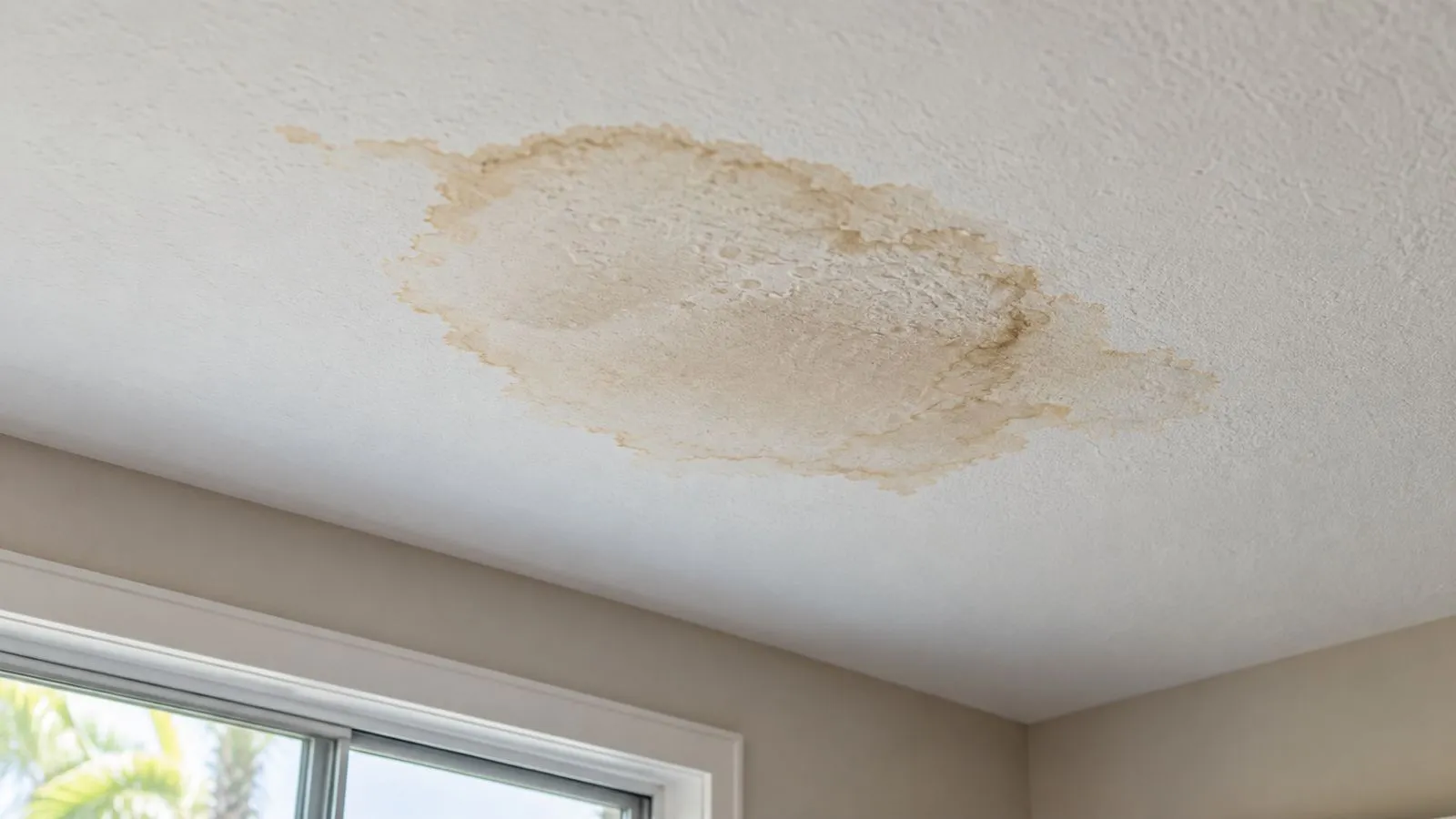
A brown stain on the ceiling is a symptom. It tells you that water reached the drywall, but not where the water came from or whether it is still coming. The answer decides who should look at it, and in some cases how quickly.
Check for urgent signs first
Before you try to work out the source, look for anything that changes the priority:
- Water that is actively dripping or spreading. If it is coming from a pipe you can identify, closing the main water shutoff valve stops the supply while you sort out the rest.
- A ceiling that bulges or sags. It is probably holding water, and wet drywall is heavy. Keep people and pets out from under it, and do not poke it or try to drain it yourself.
- A stain near a light fixture, ceiling fan, outlet, or smoke detector. Treat this as an electrical hazard. Do not touch the fixture or its switch. If you can reach the breaker safely, with dry hands, a dry floor, and no water anywhere near the panel, switch off the breaker for that area. If you cannot do that safely, or you are not sure which breaker it is, leave it alone and call an electrician.
- A fixture that flickers, buzzes, smells like burning plastic, or feels warm. Flickering lights and hot switch plates or outlet covers are warning signs the U.S. Consumer Product Safety Commission lists for wiring problems, along with breakers that trip often.
Wet electrical equipment should not be switched back on until a qualified electrician has inspected it. That applies even after the ceiling looks dry.
Let the location narrow it down
Where the stain sits is the best clue you have.
- Below a bathroom, kitchen, laundry room, or any upstairs plumbing. A supply line, drain, fixture seal, or appliance hose is the usual suspect. This is plumbing work.
- Near the indoor air handler, or along the path of the AC. Your air conditioner pulls moisture out of the air, and that water leaves through a condensate drain line. When the line clogs, water can back up and overflow into the house. ENERGY STAR notes that a plugged drain can cause water damage and affect indoor humidity. If the stain grows while the system is running, that points to the AC. You can look for water around the indoor unit, but leave the unit’s panels and wiring to a technician. Checking or changing the air filter monthly is one thing you can safely do yourself.
- Mostly after rain, with no plumbing or AC above it. The water is probably coming in from outside, most often through the roof. In South Florida the wet season typically starts in late May and runs into October, according to the National Weather Service in Miami, so heavy storms are the first thing to rule in or out. That points to the roof, so have the roof looked at first. Roofing is one of the trades ServXpress offers. The interior repair comes after the source is fixed.
Old stain or active leak?
A stain can be years old, or it can grow while you watch. Two low-effort checks tell you which:
- Mark the edge. Trace the outline in pencil and note the date. Check it again after the next rain, after the AC has run for a day, or after someone uses the shower upstairs. A stain that has grown, or drywall that feels damp, means the source is still active.
- Try the meter test. Turn off everything that uses water, read your water meter, and read it again two hours later. The EPA says that if the meter changes at all, you probably have a leak. This only covers the water supply. It will not detect a clogged AC drain, a slow drain leak, or water coming in from outside.
A dry stain is not automatically safe to ignore. It can mean water got in once and could again. Wet materials that dry within 24 to 48 hours usually do not grow mold, according to the EPA. Materials that stay damp longer are a different matter. A musty smell or visible mold means the area has been wet for a while, and it should be looked at before anyone paints over it.
Which trade handles what
- Plumbing for supply lines, drains, fixtures, and anything leaking from a pipe.
- Air conditioning for an AC system that appears to be the source of the water.
- Electrical for any fixture, outlet, switch, or wiring the water has touched.
- Roofing when the water appears to be coming in from outside, usually after rain.
- Repairs and maintenance and painting for the repair afterward: replacing damaged drywall, then texture and paint.
Real leaks do not always stay in one category. A stain from an AC line can reach a light fixture, and a plumbing leak can end in a drywall repair. ServXpress covers all of these trades, and Home Care is how we coordinate them for a homeowner through one team, so you are not sorting out separate contractors for each part of the job.
Why painting over it comes last
Paint covers a stain, but it does not stop the water. If the source is still active, the stain usually comes back through the new coat, and paint over damp drywall can hold the moisture in.
The order that works:
- Find and fix the source.
- Let the area dry completely.
- Repair or replace drywall that is soft, sagging, or damaged.
- Prime and paint.
So who should you call?
If there is any sign of sagging or of water near electrical fixtures, deal with safety first and get the right professional in. Otherwise, use the location to choose: plumbing for water below a wet room, air conditioning when the stain sits near the system, and roofing when it only shows up after rain.
Take dated photos before anything is repaired. If the damage is significant, it is worth checking with your insurer about your policy before work begins.
If you are not sure where to start, describe what you are seeing. You can email us a photo at service@servxpress.com, or reach us through the contact page, and our team can help you work out which trade should look at it first.