
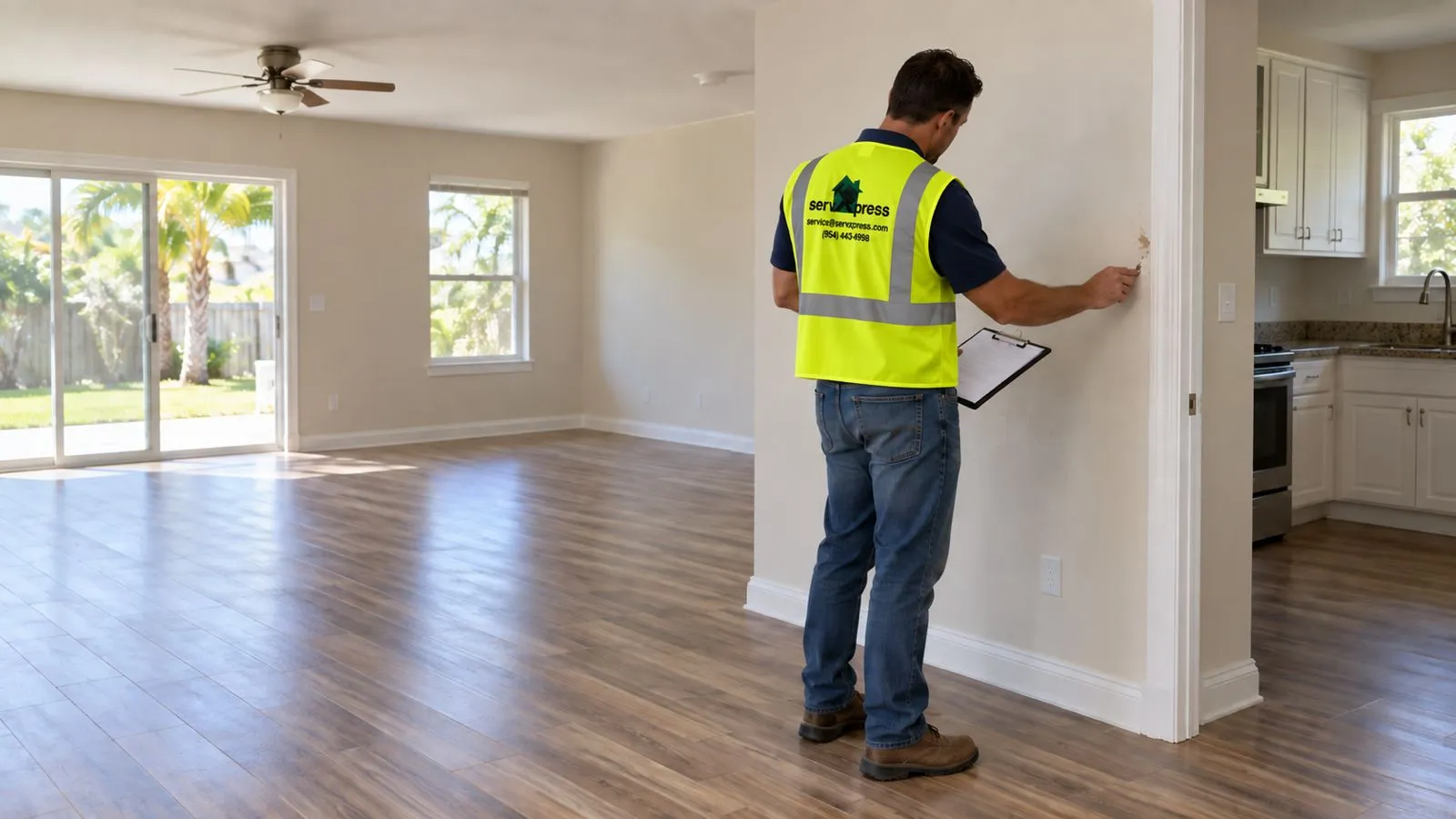
Between two occupants, the cheapest mistake to avoid is doing the same work twice. Paint goes over a stain that comes back. New flooring goes down next to a slow leak. A cleaned unit gets scuffed by the trade that should have come earlier. Most of it traces back to the same cause: cosmetic work started before anyone had a full picture of the unit.
This guide is about that picture and the order that follows from it. It is written for landlords, property managers and owners, and it works just as well if you are preparing your own home for a tenant or a sale. It is not a legal checklist. What a landlord must do at turnover depends on the lease, the jurisdiction and the property, so for those questions look to your own agreement, local rules or an attorney.
Start with a walkthrough, not a to-do list
Before anyone is scheduled, walk the whole property once with a notepad or your phone. Take dated photos of each room, and note what you see rather than what you plan to do about it. Look at:
- Ceilings and the walls under them for stains, bubbling paint or soft spots.
- Under sinks, around toilets and tubs, and near the water heater for moisture, staining or corrosion.
- Doors, windows, cabinets and hardware for anything that sticks, hangs badly or does not latch.
- Flooring for lifted edges, soft areas, stains and damage.
- Paint condition and wall damage, including holes, scuffs and marks behind furniture.
- The exterior, including entries, walkways, plants and anything touching the building.
Then sort what you find into two piles: things you can simply see and record, and things that need a professional to diagnose. The second pile is where the order of work matters most.
Deal with water, electrical and cooling first
Anything active or potentially damaging comes before finishes, because the fix can open walls or floors and because it may change the scope of everything after it.
Water and moisture. Stains, swelling, musty smells and soft baseboards all suggest moisture. Two low-effort checks are worth doing at every turnover.
- Toilets: put a few drops of food coloring in the tank. The EPA says that if any color shows in the bowl after 10 minutes, you have a leak.
- Whole property: read the water meter, use no water for two hours, and read it again. The EPA says that if the meter changes at all, you probably have a leak.
Neither check finds a clogged air conditioner drain or water entering from outside. A ceiling stain is its own diagnostic question, covered in who to call for a ceiling water stain.
Materials should be dry before anything is closed up or covered. The EPA notes that materials dried within 24 to 48 hours after a leak or spill usually do not grow mold. Anything that has stayed wet longer, or smells musty, should be looked at by a professional before it is painted or covered. Active leaks belong with a plumber.
Electrical. Note what you can see without opening anything: cracked or discolored outlet and switch covers, lights that flicker, outlets that do not work, and covers that feel warm. Any of these is a reason to have an electrician look before the next occupant arrives. Do not open panels, work on wiring or reset breakers repeatedly to see what happens.
Smoke and carbon monoxide alarms. Check that they are present, that the test button works, and how old they are. The U.S. Fire Administration says smoke alarms should be replaced 10 years after manufacture, and the date is printed on the back. The Consumer Product Safety Commission recommends carbon monoxide alarms on each level of the home and outside sleeping areas, installed according to the manufacturer’s instructions. Replacing a battery or an alarm is usually simple. Wiring behind a hardwired unit is not a DIY job.
Air conditioning. Look at the filter and the area around the indoor unit for water, and confirm the system runs and cools. ENERGY STAR advises checking or changing filters monthly, and warns that a plugged condensate drain can cause water damage. A vacant property is easy to forget on this point. In a humid climate, an empty unit with the cooling off can hold moisture that a finished room will then keep. The EPA suggests keeping indoor humidity below 60 percent, ideally between 30 and 50 percent. If the system is not cooling properly or is leaking, that is a job for an air conditioning technician, not for panels and wiring you open yourself.
Repair before you refresh
Once the source problems are handled or scheduled, move to repairs that affect how the unit works:
- Doors, locks and latches that do not close or engage properly.
- Loose or damaged cabinet doors, hinges and drawer fronts.
- Drywall holes and damaged trim that will need patching before paint.
- Loose or damaged thresholds.
- Caulk around tubs, showers and sinks that is cracked or missing.
This is typically repairs and maintenance territory. The point of doing it here, rather than after paint, is that every patch, caulk line and replaced piece of trim creates a spot that needs finishing. Repairs done later mean touching up paint you already paid for.
Paint once, after the repairs
Painting is the step that makes a unit look ready, which is also why it is tempting to do early. It goes better after repairs, and for a few specific reasons:
- Patched drywall needs to be dry, sanded and primed before paint, and repairs done later disturb the finish.
- Paint should not go over an unresolved moisture problem. It hides the stain but not the cause, and the EPA says to not paint or caulk moldy surfaces, because paint over them is likely to peel.
- If ceilings, walls and trim are all being done, ceilings usually go first so that drips and dust do not land on finished walls.
One note for older buildings: paint in housing built before 1978 may contain lead. The EPA’s Renovation, Repair and Painting program has requirements that can apply to paid work that disturbs painted surfaces in housing of that age, subject to exceptions. If the property is that old, read the EPA’s guidance before any sanding or scraping is planned.
For the surfaces you are covering, painting is the step to plan around, not the first one to book.
Floors go in late
Flooring is one of the most expensive things to damage, and it takes the most abuse from other trades: ladders, tools, dropped paint, wet boots. Where you can, plan flooring work after painting and after the heavy repairs. That does not apply if the flooring itself is the problem. Damaged flooring may be sitting over the cause, such as a leak, so raise the question early, even if the replacement comes late.
At the walkthrough, note which areas are worn, stained, lifted or soft underfoot, and whether the damage is limited to the surface. Soft or swollen flooring is a moisture question first and a flooring question second.
Don’t skip the outside
The outside is the first thing the next occupant sees, and it is often left until last. Check that walkways and entry areas are safe and clear, that plants are not pressing on the building, and that irrigation, gutters and drainage move water away from the structure. Exterior condition also matters after heavy rain, because standing water and overgrowth near the building are moisture sources. Landscaping work can usually run in parallel with the interior, since it does not compete with the trades indoors.
Finish with a second walkthrough
Once the work is done, walk the unit again with your first set of notes and photos. This is where a small list becomes a punch list:
- Compare each room against the first walkthrough, and check off every item.
- Test what moves or switches on: doors, locks, windows, lights, faucets, toilets, the air conditioning.
- Look for new damage from the work itself, such as scuffs, dust or missed touch-ups.
- Confirm the smoke and carbon monoxide alarms work.
- Take a new set of dated photos.
Keep a short record
A simple record is enough. One page or one shared note per turnover, with:
- The date of the first and final walkthrough.
- What was found, what was done and who did it.
- Anything deferred, and why.
- Where the photos are stored.
It is useful for the next turnover, since it shows what tends to go wrong in a given unit and which repairs are still open.
If you would rather not run the sequence yourself
Coordinating plumbing, painting, repairs and flooring in the right order is the part that often takes the most time. ServXpress’s Turnovers service is built around that gap between occupants: one team reviews what the unit needs and sequences the relevant trades. For the ongoing repairs and maintenance of rental properties, see PropertyCare for property managers. If you are not sure where to start, you can describe the unit, or send photos, by email at service@servxpress.com or through the contact page.